Case study · Eco-Jipe Program · Lake Jipe, Taveta, Taita-Taveta County
Beehive fences for human-elephant coexistence
The Eco-Jipe Program is a community-led conservation organisation protecting Lake Jipe, its wildlife and the communities on the Kenya–Tanzania border. Barnview & Co handles all of Eco-Jipe’s bee-related work, supporting two of its programmes: Human-Elephant Coexistence and Alternative Livelihoods.
The challenge
Around Lake Jipe, elephants moving between Tsavo West and the lake raid farms at night. Families can lose a whole season’s maize in a few hours, and conflict like this turns communities against the wildlife that conservation depends on.
Elephants avoid honey bees. A beehive fence is a line of hives hung on wire between posts along a farm boundary. When an elephant pushes through, the hives swing and the bees come out, so the elephant turns back. It is a non-lethal deterrent that also produces honey for the farmer.
Partners
Eco-Jipe works alongside the Kenya Wildlife Service, the Taita Taveta County Government, universities and conservation funders. See ecojipeprogram.org.
What we did
- Hives and fences
Built and installed 110 hives in total, including beehive fences along the boundaries of the farms most exposed to elephant raids. - Livelihood hives
Supplied hives for Eco-Jipe’s Alternative Livelihoods programme, so households earn from honey as well as protecting their crops. - January 2026
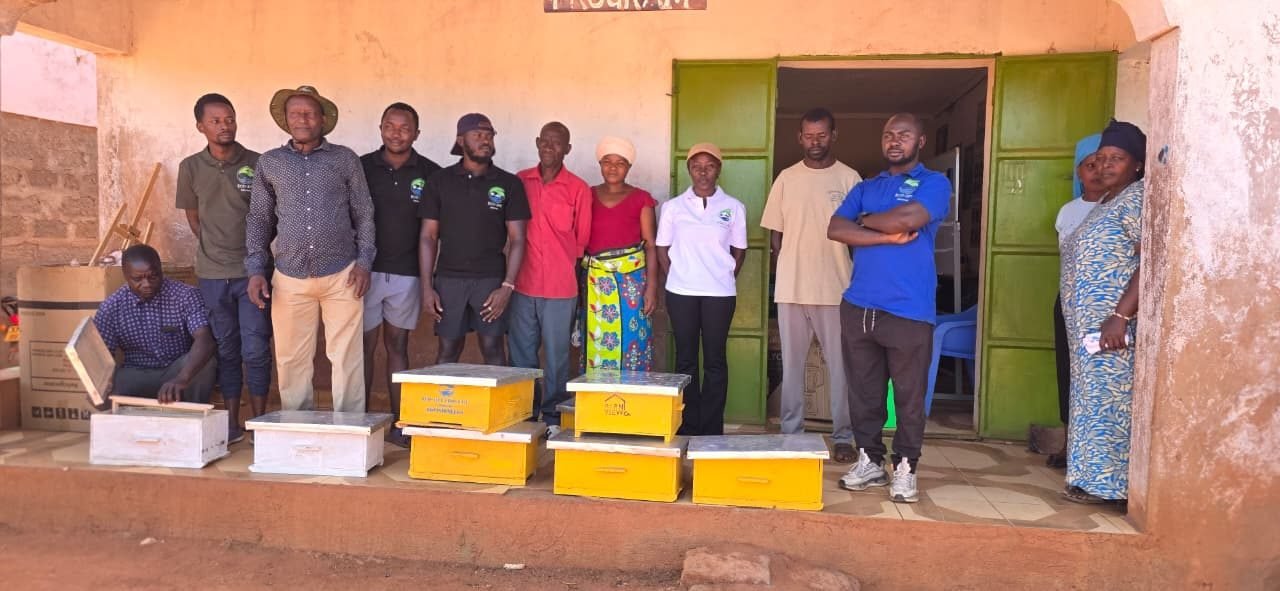
Handed over a new batch of hives to Eco-Jipe and its community beekeepers, with a classroom session on hive parts, top bars and colony care. - February 2026
Field training at Lake Jipe: suited community beekeepers inspecting hives and learning colony care and safe handling. - July 2026
Colony checks and hive management with the beekeeping teams to keep fences occupied and productive.
Results
| Measure | Result | Notes |
|---|---|---|
| Hives built and installed | 110 | For fences and household apiaries |
| Beehive fences installed | 20 | Protecting 15 farms from elephant crop raids |
| Human-elephant conflicts | −70% | In Eco-Jipe’s target areas |
| Households with alternative income | 340 | Across Eco-Jipe’s livelihoods work, towards a goal of 1,000 by 2027 |
| Crop protection on fenced farms | 100% | Over three years for a farmer featured by Eco-Jipe |
Programme figures as reported by the Eco-Jipe Program on its impact page.
Mwanaisha lost her maize to elephants for three years running. Since the beehive fence went up, her farm has been protected and she sells honey from the same hives.Farmer story shared by the Eco-Jipe Program
Full report
For the detailed project report, contact us at info@barnview.org. You can follow and support Eco-Jipe’s beehive fence work at ecojipeprogram.org.
Lake Jipe beehive fence report
Available on request from info@barnview.org